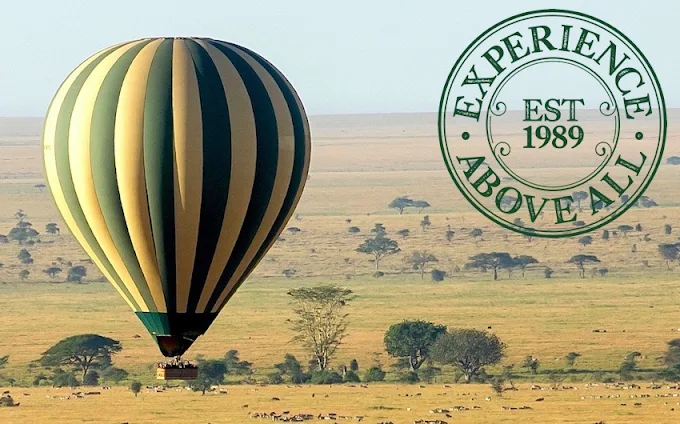
A Serengeti hot air balloon safari lifts you above the plains at sunrise. Below you, herds, rivers and rocky outcrops spread out like a living map. The burner roars in short bursts, and then the sky goes quiet.
This guide explains what really happens on a Serengeti hot air balloon safari, from the pre-dawn pickup to the bush breakfast. You will also learn how the flight fits with the Great Migration. Seven key things are covered, along with practical tips for planning.
Use it to decide whether the flight suits you, and to book it at the right time.
Table of Contents
What Is a Serengeti Hot Air Balloon Safari?
A Serengeti hot air balloon safari is a dawn flight over Serengeti National Park. It lasts about an hour. It ends with a bush breakfast and a toast at the landing site. Operators run it daily, weather permitting.
The park covers about 14,750 square kilometers of grassland, savanna and woodland. It was listed by UNESCO in 1981. You can read more on the UNESCO World Heritage page for the Serengeti.
The flight does not replace game drives. It adds a different view. Most travelers do it once, early in their stay, and spend the rest of the trip on the ground.
Why Do a Serengeti Hot Air Balloon Safari?
Some experiences are about getting close. This one is about stepping back.
- Perspective. You see the scale of the plains in a way a vehicle cannot show.
- Silence. There is no engine noise, only the burner and the wind.
- Photography. Soft dawn light makes the landscape glow.
- Occasion. The sparkling wine and bush breakfast turn it into a celebration.
A Serengeti hot air balloon safari suits couples, families with older children and anyone marking a special trip. It also suits travelers who love quiet moments in nature.
Serengeti Hot Air Balloon Safari at a Glance
| Feature | Typical detail |
|---|---|
| Pickup from camp | Between 4:00 and 5:30 am |
| Flight time | About one hour, depending on weather |
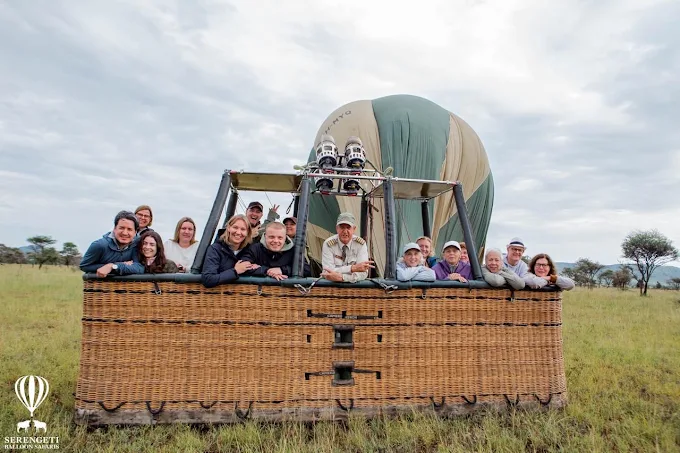
| Group size | Often up to about 16 guests |
| Minimum age | Usually seven, and some operators set it higher |
| After landing | Sparkling wine toast and a bush breakfast |
| Back at camp | Around mid-morning |
Details vary by operator, so confirm them when you book.
7 Magical Secrets of a Serengeti Hot Air Balloon Safari
These seven points explain what the experience is really like. They also show how to prepare for it.
1. A Pre-Dawn Start Before the Sun Rises
Your day begins in the dark. A driver collects you from camp early, often between 4:00 and 5:30 am. The drive to the launch site is part of the adventure, because animals are often active in the first light.
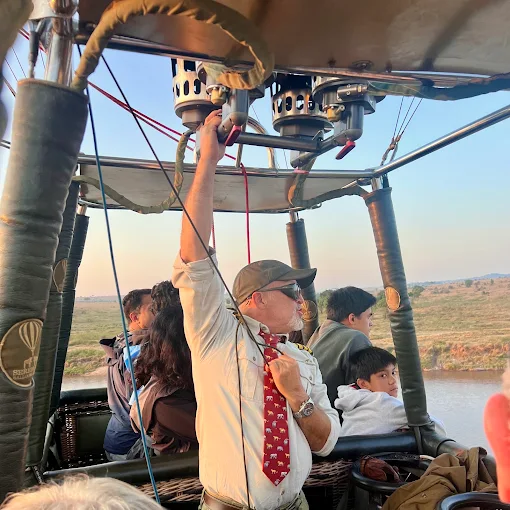
At the site you meet your pilot and crew. You get a hot drink and a safety briefing while the balloon is prepared. The pilot explains how to stand, where to hold on and how to brace for landing.
Pay attention, and ask questions. A calm briefing sets a relaxed tone for the whole flight.
2. A Quiet, Gentle Flight Over the Plains
Lift-off is smooth. The ground slips away slowly, and you rise above the trees. The burner makes short, loud bursts, and between them the Serengeti is almost silent.
A balloon drifts with the wind, so the pilot cannot steer it like a vehicle. The pilot changes height to find different air currents. Sometimes the basket skims low over the grass. Other times it climbs for a wide view.
The flight lasts about an hour, often between 50 and 70 minutes. You share the basket with other guests, often up to about 16 people. Everyone gets a view, so be considerate with photos.
3. Views of the Great Migration From Above
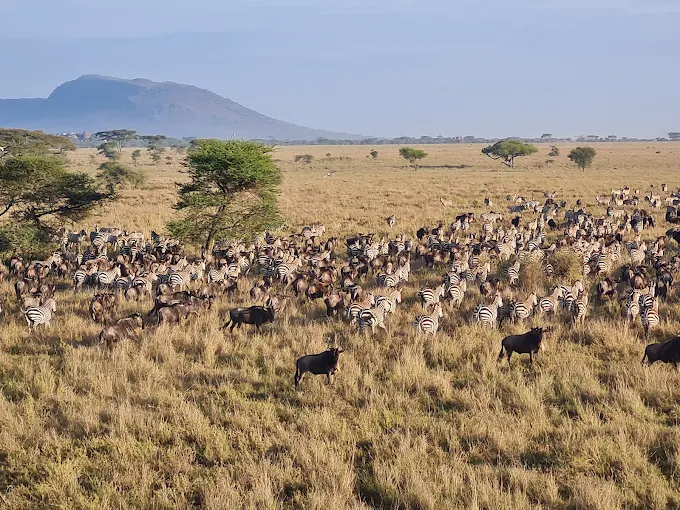
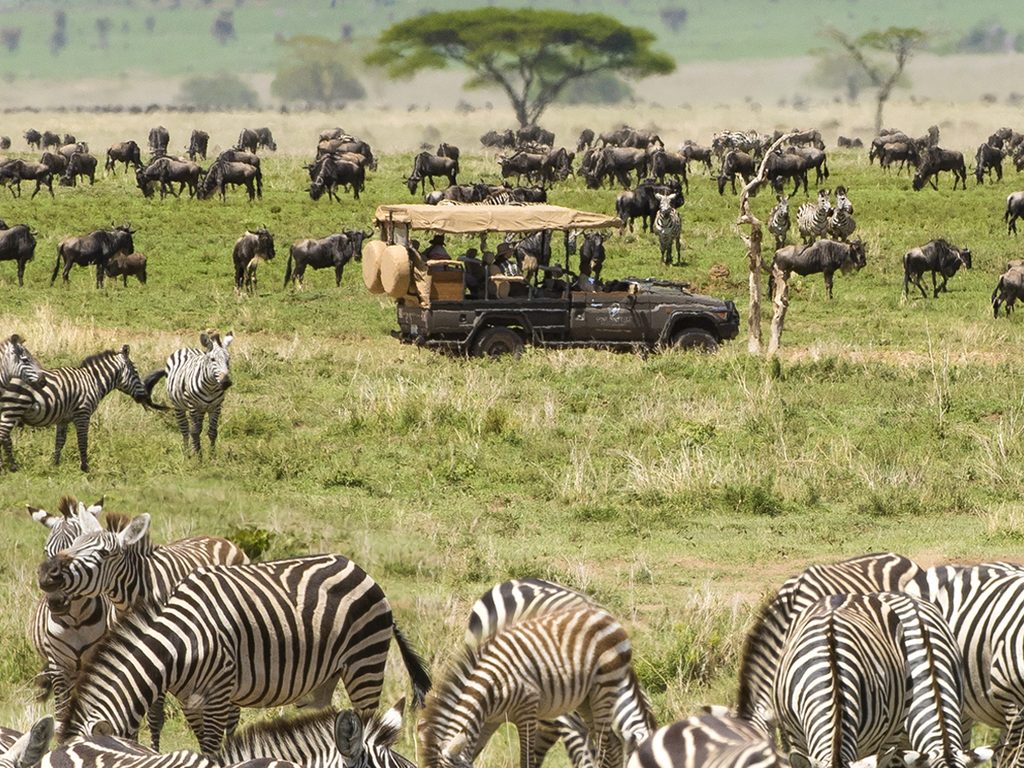
The Serengeti is home to the Great Migration. More than 1.5 million wildebeest move through the ecosystem with hundreds of thousands of zebras and gazelles. They follow the rains in a huge loop that covers roughly 800 kilometers, by some estimates.
From a balloon, the herds look like dark threads across the grass. You can see how they move in lines and clusters. You may spot tracks, rivers and bends that are hidden from the ground. Our page on Great Migration safaris explains the cycle in more detail.
No flight can promise a sighting. The herds go where the grass and water are. Your chances improve when your launch area matches the season, which later sections explain.
Calving season at Ndutu is the most dramatic time. Thousands of calves are born each day, and predators follow the herds. A Serengeti hot air balloon safari at that time can show a huge scene of life from above.
4. A New Way to See Predators and Resident Wildlife
The Serengeti is not only about wildebeest. It has one of the largest lion populations in Africa. Cheetahs and leopards live here too. Elephants, giraffes and buffalo roam year-round, and hippos fill the rivers.
From above, you see how wildlife uses the landscape. Rocky outcrops called kopjes stand out as islands in the grass. Animals gather near water, and trails cut across the plains. A sleeping lion pride can look like a cluster of golden stones. Bring patience, because a pride may hide in long grass and your pilot cannot stop for a closer look.
Do not expect close-ups. Binoculars help, and a zoom lens helps even more. For a closer look, spend the afternoon on a game drive. Our guide to Big Five and wildlife safaris shows how to plan one.
5. A Champagne Bush Breakfast After Landing
The landing is gentle. A chase vehicle follows the balloon and meets you on the ground. The landing site changes with the wind, so you rarely land in the same spot twice.
Before landing, the pilot tells you how to stand. Hold on and follow the instructions. The basket may touch down softly, and it can tip on its side in some cases. The crew helps you out safely.
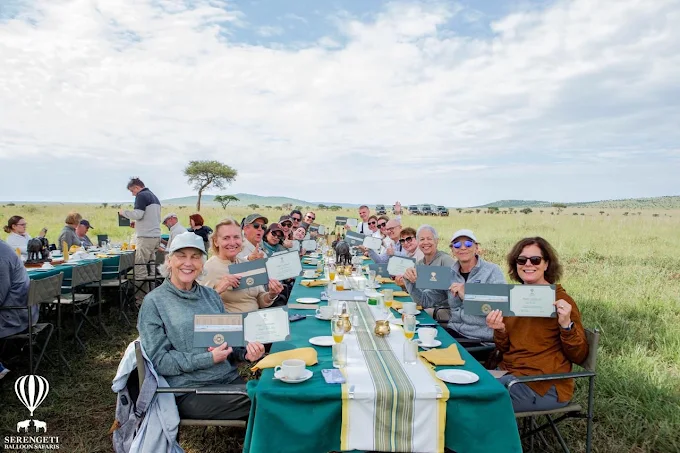
Then the celebration begins. You toast with sparkling wine, and a cooked breakfast is served in the bush, often under an acacia tree. Many operators also give you a flight certificate. After breakfast, a guide drives you back to camp, usually by mid-morning.
6. A Flight That Depends on Weather and Wind
Balloons fly only in safe conditions. Strong wind, low cloud or rain can delay or cancel a flight. The pilot makes the final decision, and the decision is about safety. Dawn is the usual flying time because early mornings tend to be calm, while winds often rise later in the day.
A cancelled flight is frustrating, but it is normal. Ask your operator about the cancellation policy before you book. Find out whether you can rebook for another day.
This is why you should book early in your stay. A spare day gives you a second chance if the first morning is not suitable.
7. Rules on Age, Health and Weight
Operators set rules for safety. The minimum age is usually seven, and some operators set it higher. Passengers must be able to climb into the basket and move around with some ease.
Ballooning is not recommended during pregnancy. It is also not recommended for people with certain spinal problems. Weight limits can apply to individual guests and to the basket as a whole.
Tell your operator about any health concerns when you book. They can advise you honestly, and they may suggest a game drive instead.
A Sample Morning on a Serengeti Hot Air Balloon Safari
Timings vary by operator and season. A typical morning looks like this.
- About 4:30 am. Pickup from your camp or lodge.
- About 5:30 am. Arrive at the launch site, enjoy a hot drink and listen to the briefing.
- Around sunrise. Lift off and drift for about an hour.
- Around 7:30 am. Land, toast with sparkling wine and sit down to breakfast.
- Mid-morning. Return to camp by vehicle, often with wildlife sightings on the way.
This rhythm shows why a Serengeti hot air balloon safari takes most of a morning. Plan nothing else until after lunch.
Where Your Serengeti Hot Air Balloon Safari Can Launch
Flights launch from a small number of areas. The main ones depend on the season.
- Central Serengeti. Launch sites near Seronera operate through much of the year. They suit wildlife viewing in any month.
- Southern Serengeti and Ndutu. Operators typically fly here from roughly late December to the end of March. This matches the calving season on the short-grass plains.
- Other areas. Some operators offer seasonal flights elsewhere. Ask what is available for your dates.
Your launch area decides what you can see. Central flights show resident wildlife and sometimes passing herds. Ndutu flights can put you above huge herds and newborn calves.
Ask your operator to confirm the launch area when you book. Make sure it fits the part of the park where you are staying.
The Great Migration Calendar and Your Balloon Flight
The herds move through the year in a clockwise loop. Here is how that loop links to a balloon flight.
- January to March. Herds gather on the southern plains near Ndutu. Calving peaks in February. Ndutu balloon flights run in this window.
- April to June. Herds trek north through the central Serengeti. They form long columns and enter the western corridor, where the Grumeti River crossings begin around June.
- July to October. The herds reach northern Serengeti and the Masai Mara. Mara River crossings peak around August and September.
- November to December. The herds return south as the short rains arrive.
Most balloon flights launch from the central or southern parts of the park. You are therefore more likely to see calving season or passing columns than river crossings. For river crossings, plan a game-drive day in the north. Weather matters too. Dry months bring clearer mornings, while the rains can bring cloud and rougher conditions. Flights can run in either season, but conditions vary. For a wider view of the season, read our guide to the best time to visit East Africa.
Balloon Safari vs Game Drive
A balloon flight and a game drive give you different things. Neither is better in every way.
A balloon gives you height, quiet and a wide view. You see the shape of the land and the pattern of the herds. It is also a memorable occasion, with a breakfast at the end.
A game drive gives you flexibility. Your guide can follow a cat, stop for a sighting or reach a river crossing. You also get closer to the animals.
Most travelers do both. The balloon offers perspective. The game drive offers detail. Together they give a fuller picture of the Serengeti.
Who Might Prefer a Game Drive Instead
A balloon flight is not for everyone. Some travelers will enjoy a game drive more than a Serengeti hot air balloon safari.
- Guests who want close animal encounters
- Travelers who cannot meet the age, health or weight rules
- Anyone short of time, since the experience takes most of a morning
- Visitors on a tight budget, since a flight costs more than a standard game drive
If any of these sounds like you, a game drive may be the better choice.
How to Book Your Serengeti Hot Air Balloon Safari
Plan your flight early. Flights can sell out in busy months, and weather can force a change.
- Choose the right day. Book early in your stay, so you have a backup day.
- Match the launch area. Ask where the flight departs and whether it fits your camp.
- Check what is included. Confirm transfers, park fees and breakfast.
- Share your details. Give your ages and weights, and mention any health conditions.
- Read the policy. Ask what happens if weather cancels the flight.
A good operator explains all this clearly. If an answer sounds vague, ask again.
What to Wear and Bring
Mornings are cold before sunrise. By breakfast the day is warming up. Layers work best.
- A warm jacket or fleece
- Long trousers and closed, flat shoes
- A hat and sunglasses
- A camera with a strap and a spare battery
- Binoculars
- A small bag that is easy to hold
Avoid loose items that can fall from the basket. For a longer list, read our East Africa safari packing list.
Photography Tips for a Serengeti Hot Air Balloon Safari
The light is best in the first hour after sunrise. A few habits help you take sharp, balanced photos.
- Use a fast shutter speed, since the basket moves slightly.
- Bring a wide lens for landscapes and a zoom for animals.
- Switch off the flash and shoot in natural light.
- Keep the camera strap around your wrist or neck.
- Put the camera down for a minute and enjoy the view.
Phones work well for wide shots. For the best results on a Serengeti hot air balloon safari, charge your batteries the night before.
Tips for a Smooth Serengeti Hot Air Balloon Safari
- Be on time. The crew works to the sunrise, and the balloon cannot wait.
- Listen to the briefing. The instructions matter most during landing.
- Share the view. Move around in the basket so everyone can look and photograph.
- Keep your hands inside. Follow the pilot’s instructions at all times.
- Pack patience. Weather, wind and timing can change the plan.
- Combine it with a game drive. The ground view completes the experience.
Frequently Asked Questions
How long is a Serengeti hot air balloon safari?
The flight lasts about an hour. The whole experience takes roughly three to five hours, including pickup, briefing, breakfast and the return drive.
What time does a Serengeti hot air balloon safari start?
Pickup is usually between 4:00 and 5:30 am. The balloon launches around sunrise.
Can children join a Serengeti hot air balloon safari?
Often yes, from about seven years old. Some operators set a higher minimum age or a height rule. Ask when you book.
Will I see the Great Migration from the balloon?
Possibly, but it is never guaranteed. The herds move with the rains. Your chances improve when your launch area matches the season.
What happens if the weather is bad?
The pilot may delay or cancel the flight. Operators have different policies, so ask about rebooking before you pay.
Is a Serengeti hot air balloon safari safe?
Operators follow safety procedures and give a briefing before every flight. Ask about pilot experience and safety standards. Follow the crew’s instructions at all times.
Is it worth doing a Serengeti hot air balloon safari?
Many travelers find it memorable, especially for the quiet and the wide view. It suits people who want a different perspective. If you prefer close animal encounters, a game drive may suit you better.
Can I book a private Serengeti hot air balloon safari?
Some operators offer private or charter flights, subject to availability. Ask whether this is possible for your dates.
What is included in a Serengeti hot air balloon safari?
Most include the flight, a briefing, a sparkling wine toast and a bush breakfast. Many also give you a certificate. Transfers, park fees and gratuities may be extra, so confirm in advance.
Can I combine a Serengeti hot air balloon safari with Ngorongoro Crater?
Yes. Many northern circuit itineraries include both. See our page on the Ngorongoro Conservation Area to plan the route.
Book Your Serengeti Hot Air Balloon Safari Today
A Serengeti hot air balloon safari gives you a sunrise, a bird’s-eye view and a breakfast in the bush. Launch areas, dates and weather all need careful planning. Let local experts handle the details so you can focus on the experience. We can add a balloon flight to a Serengeti, Ngorongoro and Tarangire route.
Speak with Nabigaga Tours and Travels to add a balloon flight to your Tanzania safari. Contact us now to plan your trip.













[…] our guides to the Ngorongoro Crater and the Serengeti hot air balloon safari for more Tanzania […]
[…] 7-day Tanzania Great Migration safari covers the Serengeti and Ndutu. Read our guide to a Serengeti hot air balloon safari for another way to see the […]