A Uganda adventure safari swaps the back seat of a vehicle for a raft, a trekking pole or a pair of muddy boots. You still see wildlife. You also earn the views. Few countries pack so much into such a small space.
This guide covers ten experiences, from gorilla trekking in the southwest to white-water rafting on the Nile. Each one comes with practical details, so you know what to expect. Pick two or three, or build a longer route around them.
Read on for effort levels, the best time to go, safety advice and a packing list. Use it to plan a Uganda adventure safari that matches your fitness and your dates.
Table of Contents
Why Choose a Uganda Adventure Safari?
Classic game drives are wonderful, but they keep you inside a vehicle. A Uganda adventure safari puts you in the landscape.
- Active days. You hike, raft, paddle and climb.
- Closer encounters. Walking trails show you details a vehicle misses.
- Variety. One trip can include rainforest, volcanoes, rivers and snow-capped peaks.
- Flexible effort. Each region offers gentle options and tough ones.
A Uganda adventure safari suits couples, friends, active families and solo travelers. You can still add game drives between the activities.
Adventure also supports local jobs. Guides, porters, boat crews and village hosts often live near the places you visit.
Uganda Adventure Safari at a Glance
| Adventure | Region | Effort | Time needed |
|---|---|---|---|
| Gorilla trekking | Southwest | Moderate to hard | Half to full day |
| Chimpanzee trekking | West | Easy to moderate | Half day |
| Nile rafting | East | Moderate | Full day |
| Bungee and quad biking | East | Easy | Half day |
| Sipi Falls | East | Easy to moderate | Half to full day |
| Mount Elgon | East | Hard | Four days |
| Rwenzori Mountains | West | Hard | Three to seven days |
| Mgahinga volcanoes | Southwest | Moderate to hard | Full day |
| Lake Bunyonyi canoeing | Southwest | Easy | Half day |
| Murchison Falls | North | Easy to moderate | Half to full day |
How to Choose Your Uganda Adventure Safari Mix
Start with your fitness and your time. Pick one anchor experience and build around it. Gorilla trekking, Nile rafting and the Murchison cruise are strong anchors.
If you love walking, add a volcano hike or a Rwenzori day trek. If you prefer easier days, choose Sipi Falls, Lake Bunyonyi and a chimpanzee trek.
Think about travel time too. Uganda is compact, but roads can be slow. Be realistic about drive times, which can fill a whole day. A good plan groups nearby activities together.
10 Uganda Adventure Safari Experiences to Try
These ten experiences cover every region and every fitness level. Pick the ones that match your energy and your calendar.
1. Gorilla Trekking in Bwindi
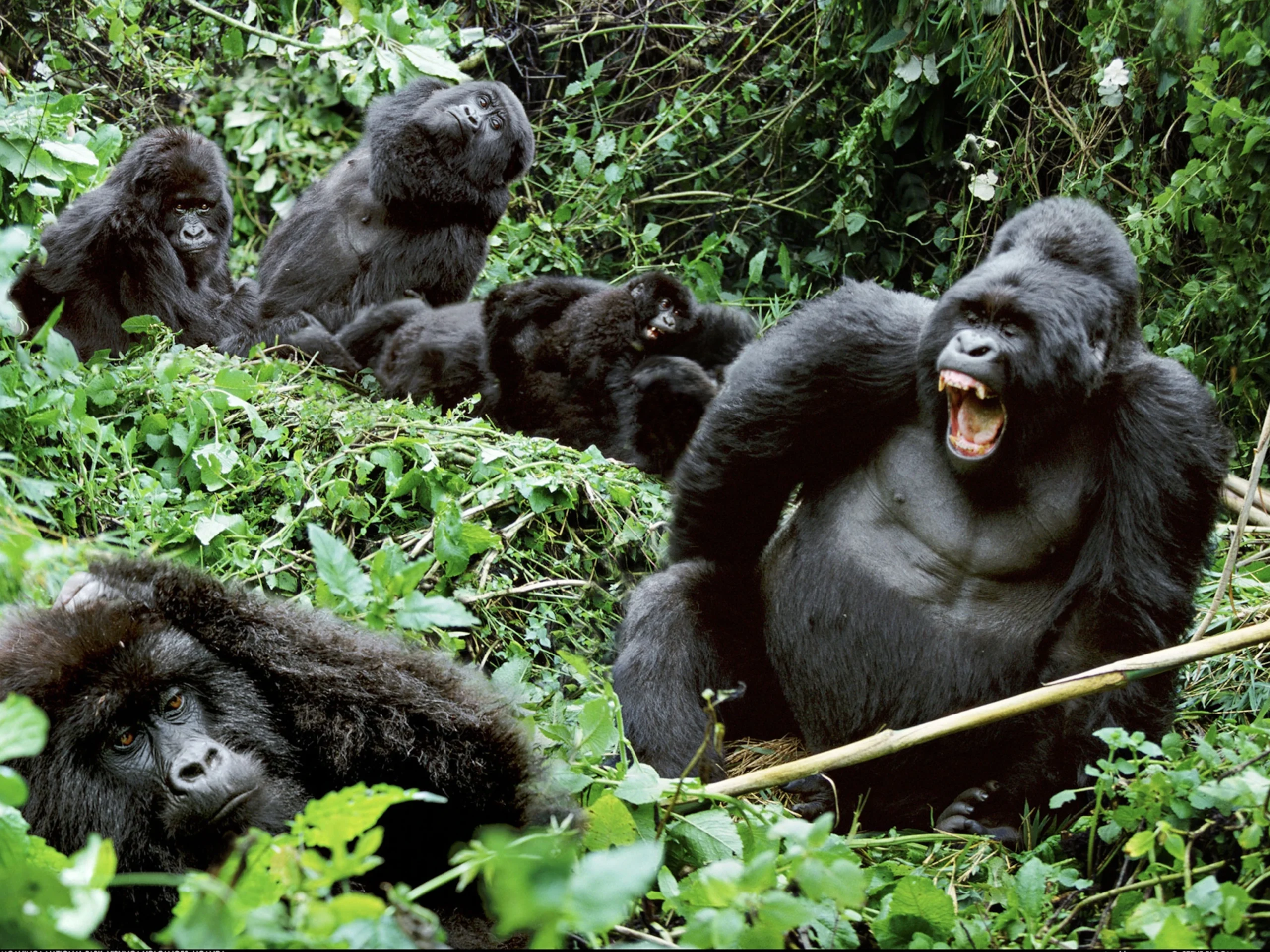
No other adventure matches a morning with mountain gorillas. You hike into Bwindi Impenetrable National Park with a ranger and trackers. The walk can take under two hours or most of the day. Paths are steep, muddy and thick with vegetation.
Once you find the family, you spend one hour with them. Trekkers must be at least 15 years old. A porter can carry your bag and help on the slopes. Permits are limited, so book early. Our guides to gorilla trekking in Uganda , Bwindi gorilla trekking permits https://ugandawildlife.org/activities/gorilla-tracking/ and explain the rules. This is the heart of any Uganda adventure safari that includes primates.
Good to know: Trek time depends on where the group has moved overnight. Bring a packed lunch and plenty of water. Plan nothing else for that day, because the climb is tiring.
2. Chimpanzee Trekking in Kibale
Kibale National Park shelters about thirteen primate species. Chimpanzees are the star. You walk into the forest with a ranger and follow the calls to a habituated community. Once you find them, you spend one hour watching them feed, groom and play.
The forest is humid and the paths can be slippery. Listen for the loud hooting that tells your guide where the group has gone. Age limits apply, so check the minimum age before you book. See our guide to chimpanzee trekking in Kibale for more detail. It is a gentler start to a Uganda adventure safari than a gorilla trek.
Good to know: Wear long sleeves and trousers to protect against nettles and insects. Keep your voice low. Bring a light rain jacket, because forest weather changes fast.
3. White-Water Rafting on the Nile
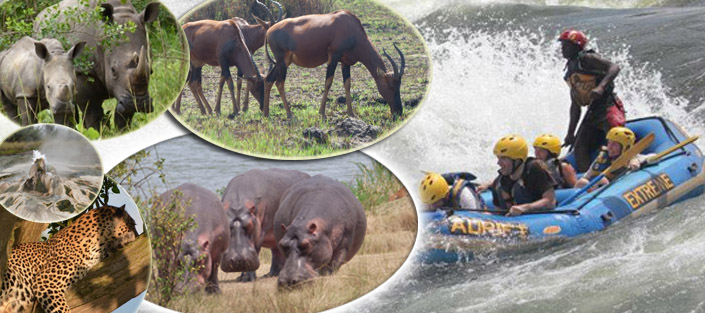
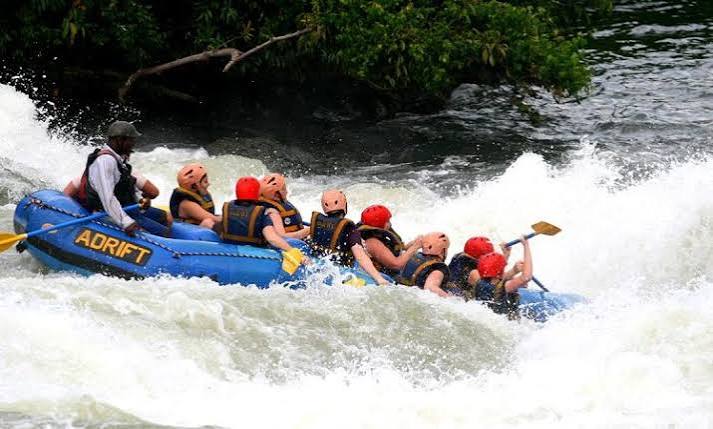
Jinja is the adventure hub of Uganda, and the Nile begins here. The classic rafting day starts near Bujagali Falls and runs about 20 kilometers downstream to Itanda. It includes nine major rapids, and four of them reach grade five.
Calm stretches between rapids let you float, swim and watch birds. If you want something gentler, ask about a family float that avoids the biggest rapids. You can reach Jinja within a half-day drive from Entebbe. Rafting is the most popular water adventure on any Uganda adventure safari.
Good to know: Wear a swimsuit under quick-dry clothes and bring a change. Operators supply helmets and life jackets. You do not need rafting experience, since guides lead the raft and brief you before each major rapid.
4. Bungee, Quad Biking and Kayaking in Jinja
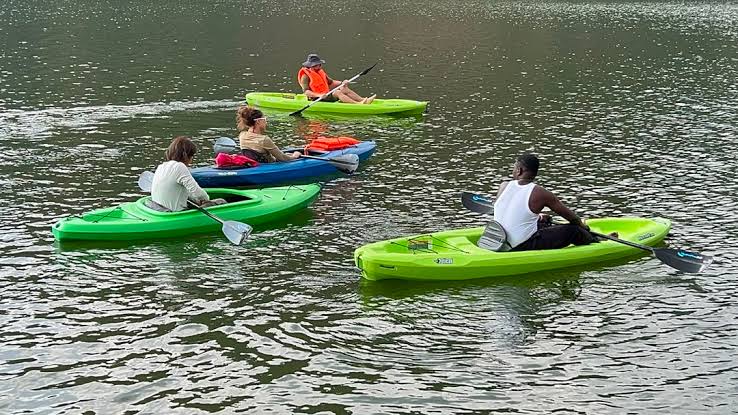
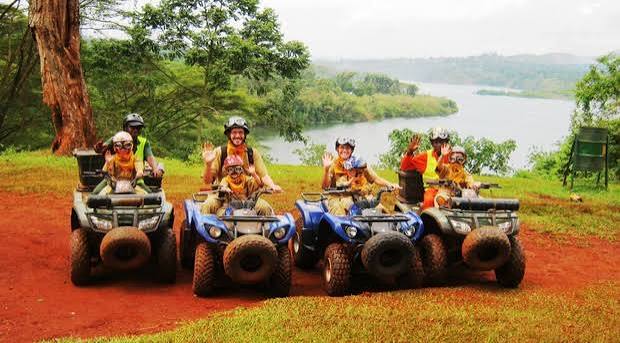
Rafting is only the start in Jinja. A bungee platform stands high above the Nile, and the jump ends with a splash in the river. Quad bike trails wind through villages, farmland and forest edges. Kayaking and stand-up paddleboarding give you a calmer way to enjoy the water.
You can combine two or three of these in one day. Start with a morning ride and finish with an afternoon paddle. Jinja also marks the source of the Nile, which makes a good stop on the way. Add it to a Uganda adventure safari for a dose of adrenaline.
Good to know: Quad biking and bungee have safety briefings and age or weight rules. Ask your operator about them in advance. Wear closed shoes and bring a hat and sunscreen.
5. Hiking and Abseiling at Sipi Falls
Sipi Falls sits on the slopes of Mount Elgon in eastern Uganda. Three waterfalls tumble down the cliffs into a green valley of coffee farms. Walk the trails between the falls with a local guide.
Visit a coffee farm and see how beans are picked and roasted. If you want a thrill, ask about abseiling beside the water. Sipi suits travelers who enjoy scenery and village life as much as adrenaline. It also adds a cool, quiet contrast to the heat of the lowlands. You can combine it with Jinja on an eastern Uganda loop.
Good to know: Trails can be slippery after rain, so wear shoes with grip. Allow a full day to see all three falls at an easy pace. Pack a light jacket for cool evenings.
6. Climbing Mount Elgon
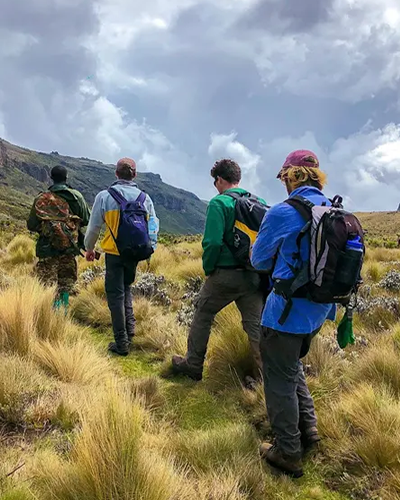
Mount Elgon is a huge extinct volcano on the border with Kenya. Its highest point, Wagagai, stands at 4,321 meters and lies entirely in Uganda. The popular Sasa trail starts at Budadiri and takes about four days up and down.
The climb passes through forest, bamboo and open moorland. Each day brings several hours of steep, often muddy walking. The reward is a wide crater and big views across the plains. Elgon is easier than the Rwenzori but still a serious hike on a Uganda adventure safari.
Good to know: Go in the drier months for firmer trails. Pack warm layers, a waterproof jacket and gloves. Hire a porter if you want help with your bag.
7. Trekking the Rwenzori Mountains
The Rwenzori are known as the Mountains of the Moon. Margherita Peak, at 5,109 meters, is the highest point in Uganda and the third highest in Africa. The classic Central Circuit takes about seven days and six nights.
Trails are rocky, muddy and steep. You pass moorland, giant heathers and glacial lakes. If you do not want a full expedition, three- and four-day hikes show you the best of the range. Rwenzori treks suit experienced hikers who want the toughest Uganda adventure safari option.
Good to know: Kasese is the usual base, and the trails start at Nyakalengija. Allow time to adjust to the altitude. Pack for cold, wet weather even in the dry season.
8. Volcano Hikes and Golden Monkeys in Mgahinga
Mgahinga is Uganda’s smallest national park, tucked into the Virunga volcanoes in the far southwest. Three volcanoes rise here: Gahinga, Sabinyo and Muhabura. Each hike takes a full day, roughly six to nine hours.
Muhabura, at 4,127 meters, is the toughest. On Sabinyo you can stand where Uganda, Rwanda and Congo meet. Golden monkey trekking is an easier alternative, and you spend one hour with the troop. The Batwa Trail adds a cultural walk led by the forest’s original people. Mgahinga is a quiet, scenic corner of any Uganda adventure safari.
Good to know: Start early, because the volcano hikes are long. Pack layers, since it gets cold near the summit. Book your trek in advance through the park authorities.
9. Canoeing on Lake Bunyonyi
Lake Bunyonyi lies in the southwest, ringed by terraced hills. Islands dot the water, and local guides paddle dugout canoes between them. The pace is slow and the scenery is calm.
Join a canoe trip in the morning, when the water is still. Stop to visit a village or watch the birds. It is a quiet finish after gorilla trekking in Bwindi. If you want more action, ask about hiking the hills above the lake. Lake Bunyonyi is a calm chapter in a Uganda adventure safari.
Good to know: Bring a light jacket, since mornings can be cool. Wear sun protection. Ask your lodge about canoe tours and local hikes. Mornings are usually calmest on the water.
10. Murchison Falls: Nile Cruise and Falls Hike
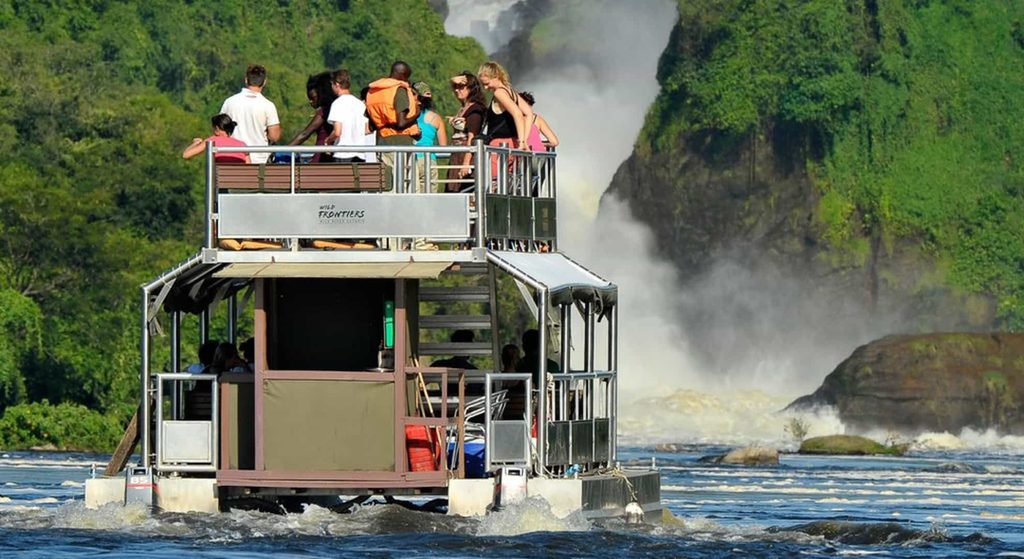
At Murchison Falls the entire Nile squeezes through a gap about seven meters wide. It then plunges roughly 43 meters into a churning pool. A boat cruise heads upstream toward the falls, past hippos, crocodiles and waterbirds.
The hike to the top of the falls begins after a boat ride to Baker’s Point. The climb takes about 45 minutes. At the top the roar and spray are unforgettable. Add a game drive on the savannah for a classic mix. Read more in our guide to Murchison Falls National Park. It is the signature stop on a northern Uganda adventure safari.
Good to know: The drive from Kampala takes six to seven hours. Wear a hat and bring water on the hike. Ask about Budongo Forest if you want to add a chimpanzee trek. Early starts give you the coolest hours for walking.
How to Combine Your Uganda Adventure Safari
You do not need to do everything. Four simple routes show how the pieces fit.
- Eastern loop. Raft the Nile at Jinja, hike to Sipi Falls and climb Mount Elgon.
- Southwest route. Trek gorillas in Bwindi, canoe on Lake Bunyonyi and hike a volcano in Mgahinga.
- Western route. Track chimpanzees in Kibale, then trek in the Rwenzori Mountains.
- Northern route. Cruise the Nile at Murchison and walk to the top of the falls.
Our guide to the best Africa safari circuits shows how parks link up. Most routes work best with one or two bases rather than daily moves. A good planner can shape any Uganda adventure safari around your pace.
Best Time for a Uganda Adventure Safari
The dry seasons work best for most activities. They run roughly from June to September and from December to February. Trails are firmer, views are clearer and roads are easier.
Treks and hikes still run in the rains from March to May. Expect mud, slippery slopes and cloud on the summits. The Rwenzori can be wet in any month, so pack for it.
Match the month to the activity. Gorilla treks and volcano hikes are easier in the dry months. Operators run Nile rafting trips through much of the year. Lake Bunyonyi and Sipi Falls are lovely in most seasons, though trails get muddy after rain.
For a month-by-month view, see our guide to the best time to visit East Africa. Whatever the month, book permits first and plan your Uganda adventure safari around them.
Fitness, Safety and Responsible Travel
Adventure should feel exciting, not risky. A few simple habits keep it that way.
- Be honest about fitness. Choose hikes that match your level and add harder ones later.
- Use licensed guides. Good operators brief you, supply safety gear and check conditions.
- Follow every briefing. Wear helmets and life jackets whenever they are offered.
- Climb slowly at altitude. Drink water and tell your guide if you feel unwell.
- Check your insurance. Make sure it covers adventure activities and medical evacuation.
- Respect people and wildlife. Stay on trails, keep your distance and carry out your litter.
Your operator can split harder days with rest or a lighter activity. Share your fitness level, health conditions and any fear of heights when you book, so the plan fits you.
What to Pack for a Uganda Adventure Safari
- Waterproof hiking boots with good grip
- Quick-dry clothes and a warm layer
- A light rain jacket
- Gloves for gorilla treks and bike rides
- A hat, sunscreen and sunglasses
- A reusable water bottle
- A small daypack and a power bank
- Insect repellent and a basic first-aid kit
Tips for a Smooth Uganda Adventure Safari
- Space out hard days. Follow a big hike with a rest or an easy drive.
- Book permits early. Gorilla and chimpanzee permits are limited.
- Start training early. A few weeks of hill walks make a real difference.
- Pack for several climates. Forest, lake and mountain weather can change in one day.
- Leave buffer time. Long drives can run late.
- Carry small cash. Tips and local snacks are easier to pay for with small notes.
- Ask your doctor. Discuss malaria prevention and vaccinations before you travel.
Frequently Asked Questions
What is a Uganda adventure safari?
It is a trip that mixes wildlife viewing with active experiences. You might raft a river, climb a volcano or trek through rainforest. Most routes also include classic game drives.
Do I need to be very fit for a Uganda adventure safari?
No. Some experiences, such as canoeing on Lake Bunyonyi or the Murchison cruise, are easy. Others, like the Rwenzori Central Circuit, need real fitness. A good planner matches the activities to your level.
Can families join a Uganda adventure safari?
Yes, with the right choices. A family rafting float and a Bunyonyi canoe trip suit many children. Gorilla trekking has a minimum age of 15.
Can I add game drives to a Uganda adventure safari?
Yes. You can pair active days with Murchison Falls, Queen Elizabeth National Park or Lake Mburo. It balances effort with relaxation.
How many days do I need for a Uganda adventure safari?
Plan seven to ten days for two regions. Add three or four days for a mountain trek. Long hikes need rest days, so build them in.
Is a Uganda adventure safari safe?
Yes, when you use licensed operators and follow every briefing. Guides check conditions and supply safety gear. Choose activities that match your skill, and confirm that your travel insurance covers them.
What is the hardest activity on a Uganda adventure safari?
The Rwenzori Central Circuit is the toughest because of its altitude and length. Mount Elgon and the Mgahinga volcanoes are hard days too. Everything else is moderate or easy.
What is the best month for a Uganda adventure safari?
June to September and December to February are the driest months. Trails are firmer and views are clearer. Book permits and lodges early for these months.
Can I combine a Uganda adventure safari with Rwanda or Kenya?
Yes. Uganda links with Rwanda by road through Cyanika, and with Kenya by road or air. Many active routes start in Uganda and finish in Rwanda’s volcanoes or Kenya’s Rift Valley.
Book Your Uganda Adventure Safari Today
A Uganda adventure safari gives you rapids, volcanoes, rainforest and snow-capped peaks in one trip. Permits, guides and transport all need early planning. Let local experts handle the details so you can focus on the adventure.
Speak with Nabigaga Tours and Travels to build a private route around your fitness and dates. Contact us now to plan your trip.